A kart’s engine should idle while the vehicle stands still, then transmit torque as speed rises, with nothing for the driver to operate. Our drivetrain group designed a custom centrifugal clutch, the engine mounting and a fixed-ratio chain transmission for a Honda GC190. I established the clutch concept, produced most of its final CAD and made the KeyShot renders on this page; the sizing calculations and the report were joint work with Edvin Börthas.
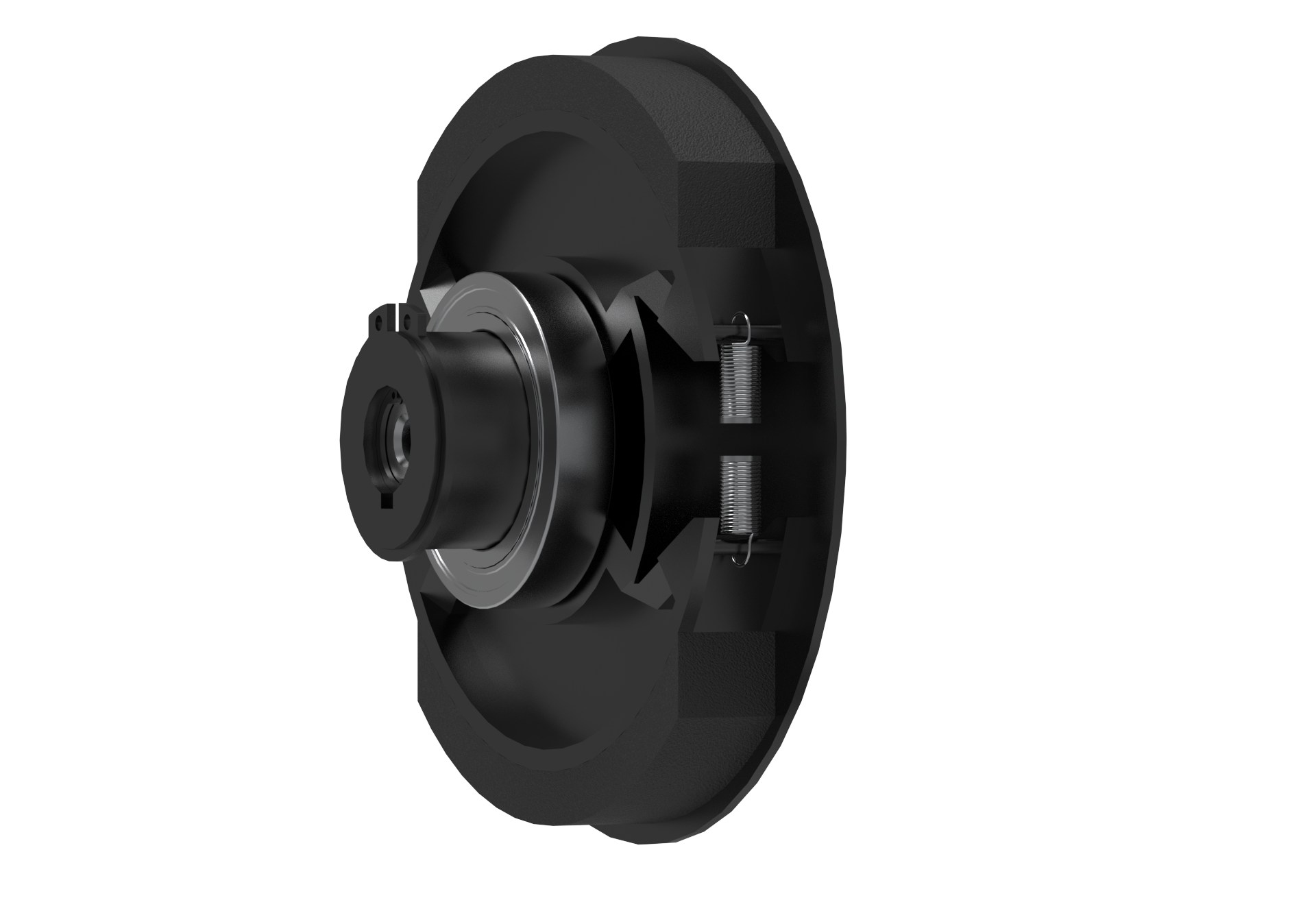
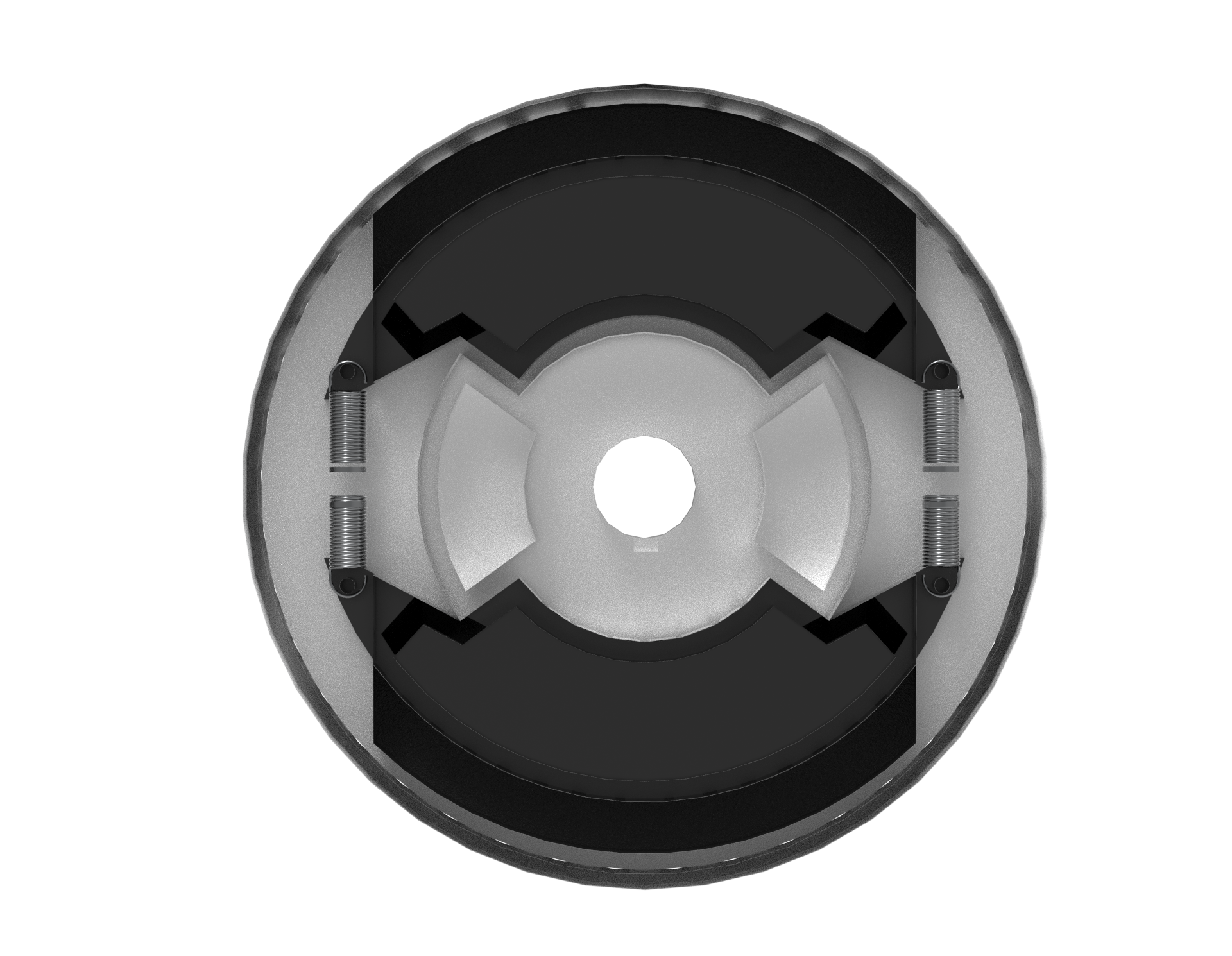
The carrier, two shoes and return springs inside the drum. Original KeyShot render.
01 / How it engages
Speed moves the shoes. Friction takes the load.
The carrier rotates with the engine shaft. As speed rises, centrifugal force moves the two shoes outward against their springs until the linings contact the drum, and torque passes through friction to the output.
The design problem I set myself was to choose geometry and spring behaviour together: free idle, progressive engagement, enough torque capacity and acceptable contact conditions.
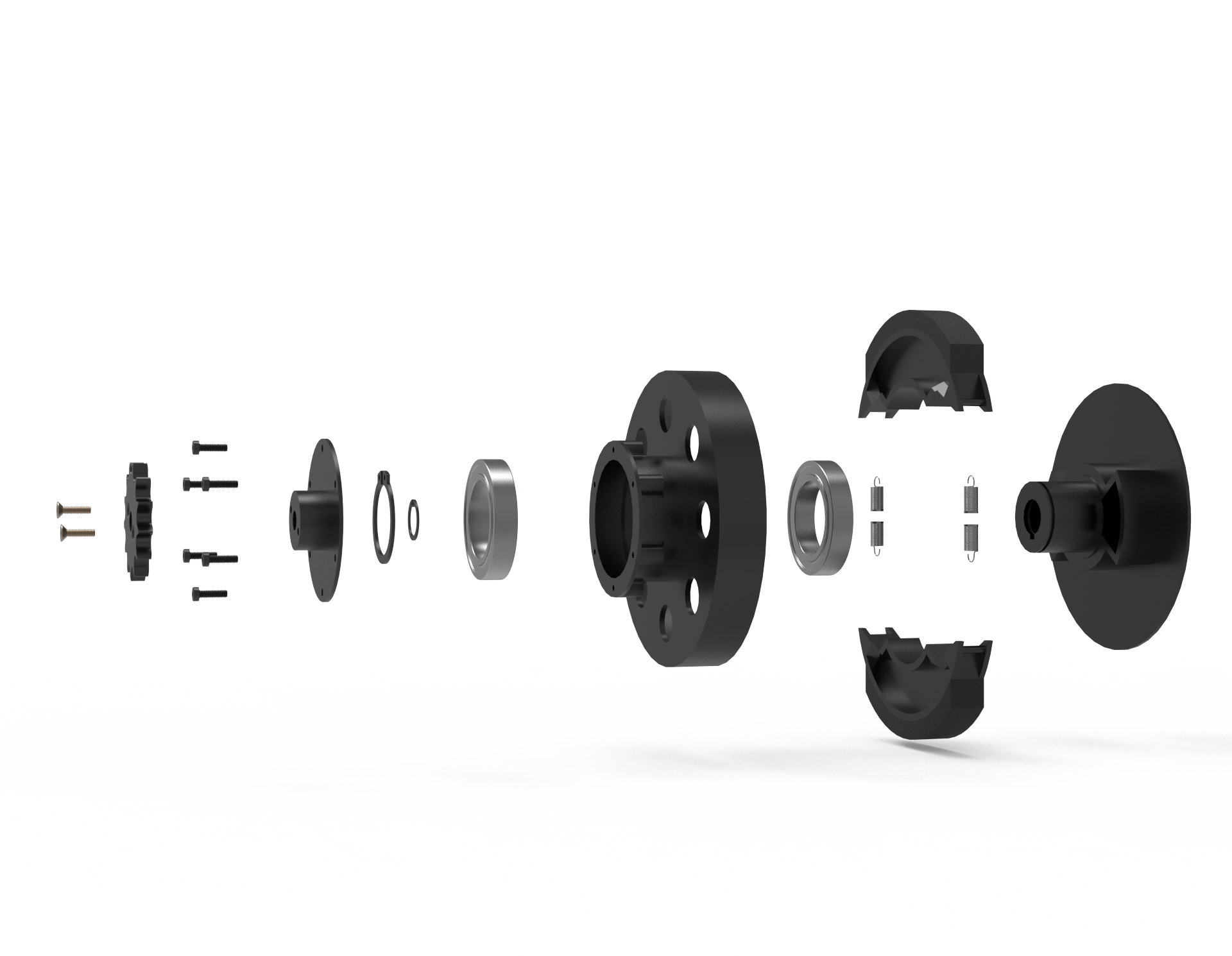
Exploded clutch assembly: the shaft interface, carrier, shoes, drum and fasteners.
INPUT
Shaft interface and carrier
CONTACT
Two shoes, linings and return springs
OUTPUT
Drum, bearing and chain sprocket
The sizing approach+
We explored shoe geometry, radius, lining width, spring preload and spring rate with a Python sweep that screened lining pressure and pressure–velocity conditions. That sweep is a simplified geometry study, not a direct simulation of every CAD surface, and its assumptions differ from the final material descriptions, so I do not present it as proof of a validated optimum.
Source: Reviewed drivetrain report, PDF pp8–11,17; Python sweep appendix pp47–51.
02 / Around the clutch
From the shaft to the frame.
The clutch has to fit the engine shaft, stay supported, drive a chain and remain serviceable within the frame. The mounting and bearing details decide whether the calculated torque has a usable mechanical path, which is why the CAD around the clutch mattered as much as the clutch itself.
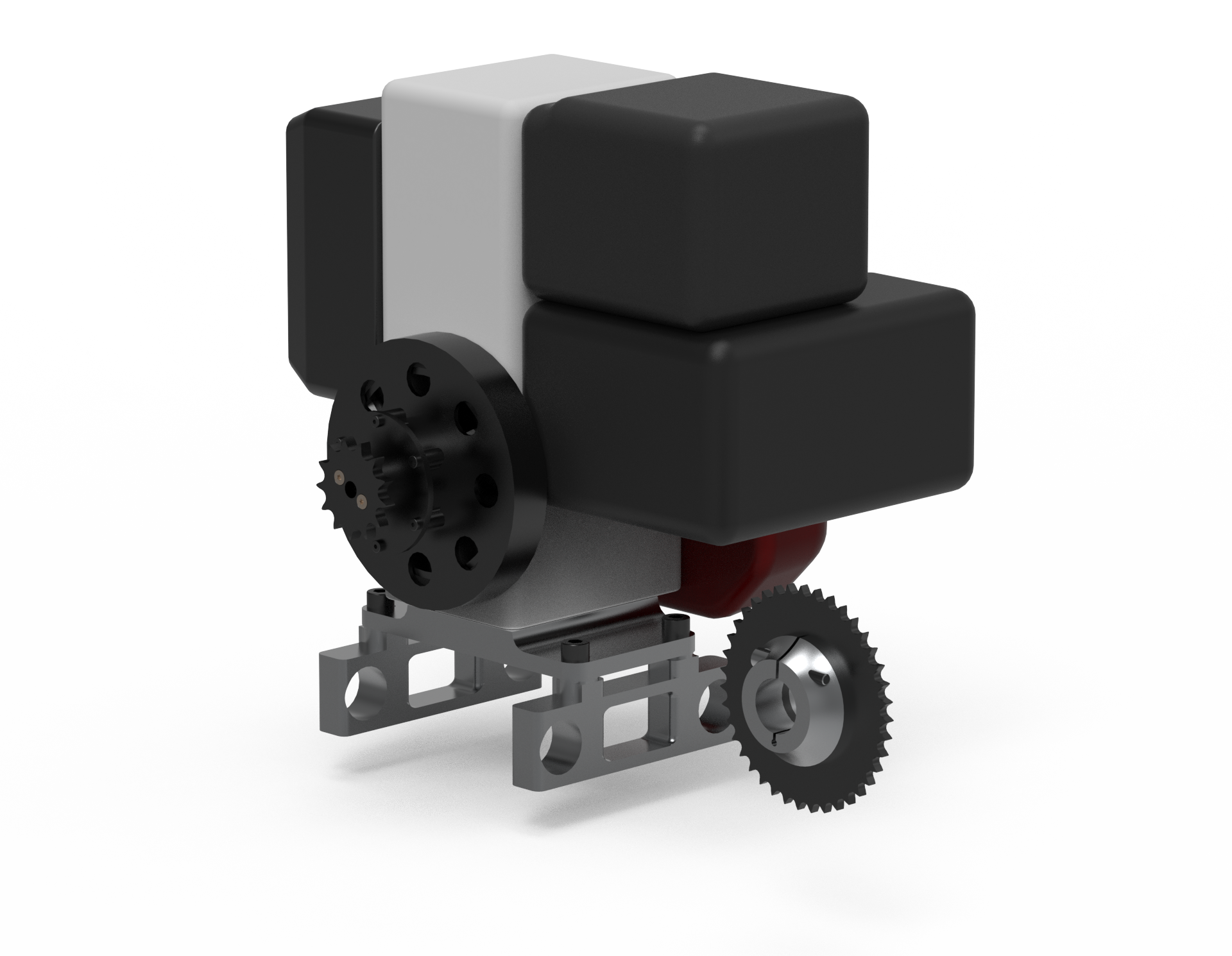
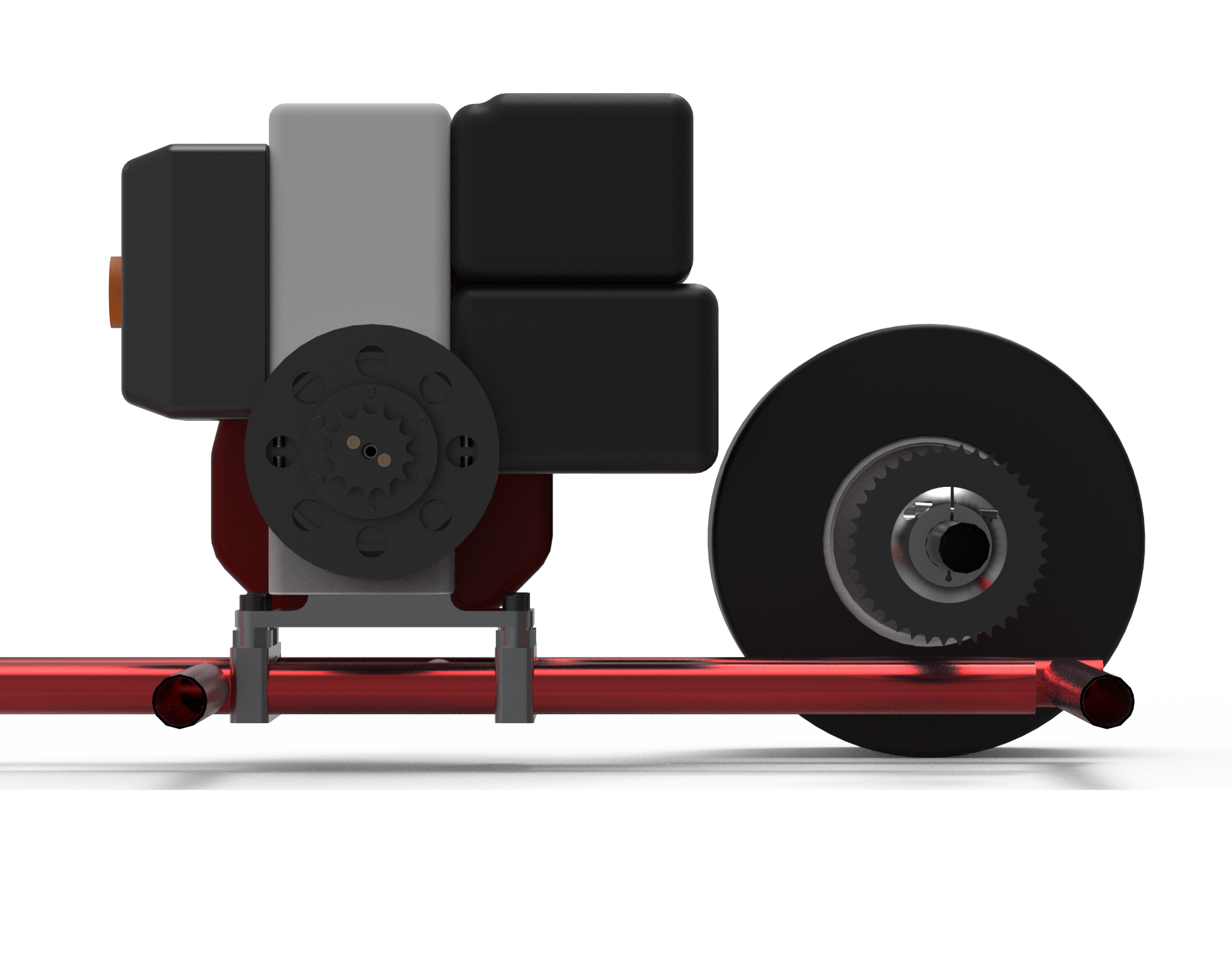
The transmission uses 13- and 39-tooth sprockets for a 3:1 ratio. We developed the engine mounting, chain loading and joint calculations alongside the clutch.
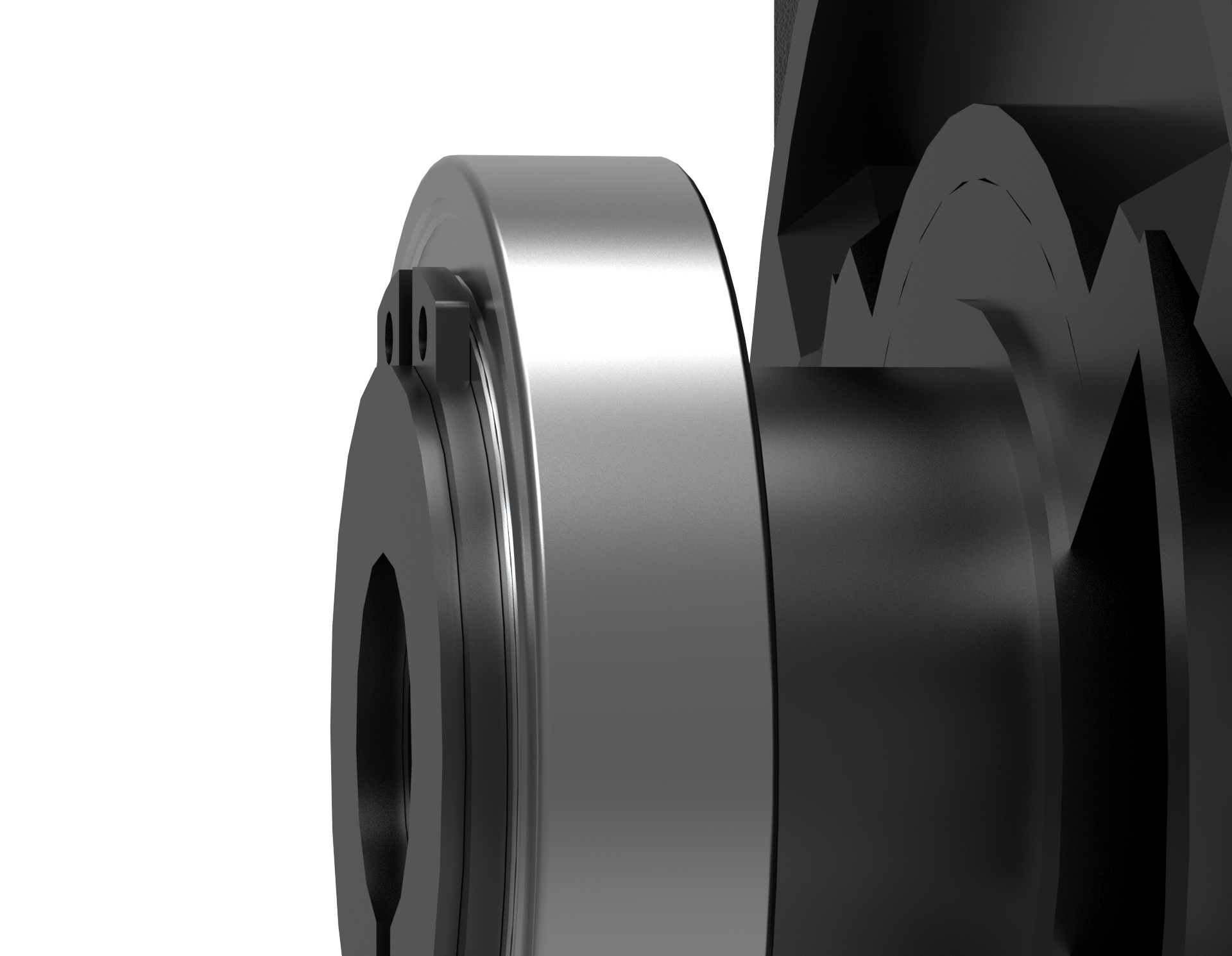
Bearing and shaft detail in the designed assembly.
Designed and purchased parts+
We identified the shaft transition, drum, shoes, linings and carrier as custom components; bearings, springs, fasteners and sprockets are selected parts. The rendered vehicle context includes work by other PRO35 groups; the project credit here is for the drivetrain.
Source: Report PDF pp12–24; custom-component table p17.
03 / System behaviour
From engagement to acceleration.
The course acceleration model connects engine torque, clutch capacity, reflected inertia and rolling and aerodynamic load. Configured with our parameters, it predicts 0–50 km/h in 9.692 seconds. That is a model result, not a measured vehicle run.
The model is useful within its assumptions. The report’s much higher extrapolated top speed lies beyond the supplied engine-curve range, so I do not use it as a performance claim here.
The complete chain-drive arrangement. PRO35 team assembly; this project covers the drivetrain.
Model provenance and limits+
The recovered MATLAB package contains the KTH acceleration framework credited to Anders Söderberg, configured with our project parameters. The report marks engagement beginning around 1,201 rpm and the end of slip around 2,500 rpm. These are reported simulation milestones, not validation of a manufactured clutch.
Source: Report PDF p27; PRO35_MATLAB.zip, acceleration and torque functions.
04 / Design review
The details decide what is ready.
Two calculations remain below the report’s target factor of 2.1. I keep them in the design review even though the abstract describes the requirements more broadly as fulfilled.
We proposed a third fastener for the sprocket joint. The design should be revised and the margins recalculated before the assembly is treated as ready for manufacture.
Two reported factors below the design target
Check
Calculated factor
Target
Review
Chain bearing pressure
1.355
2.1
Below target
Sprocket joint
1.513
2.1
Below target
What I took from the project+
Breaking the system into functions, developing the clutch concept, producing most of its final CAD and introducing the KeyShot presentation work are what I recorded in my own reflections at the time. The lesson I keep is to reunite those functions through explicit interface and verification checks.
Source: Report PDF pp14,23–24; personal Canvas reflections, October and December 2025.
Guided scroll · scroll or press Escape to take over